Survival meter
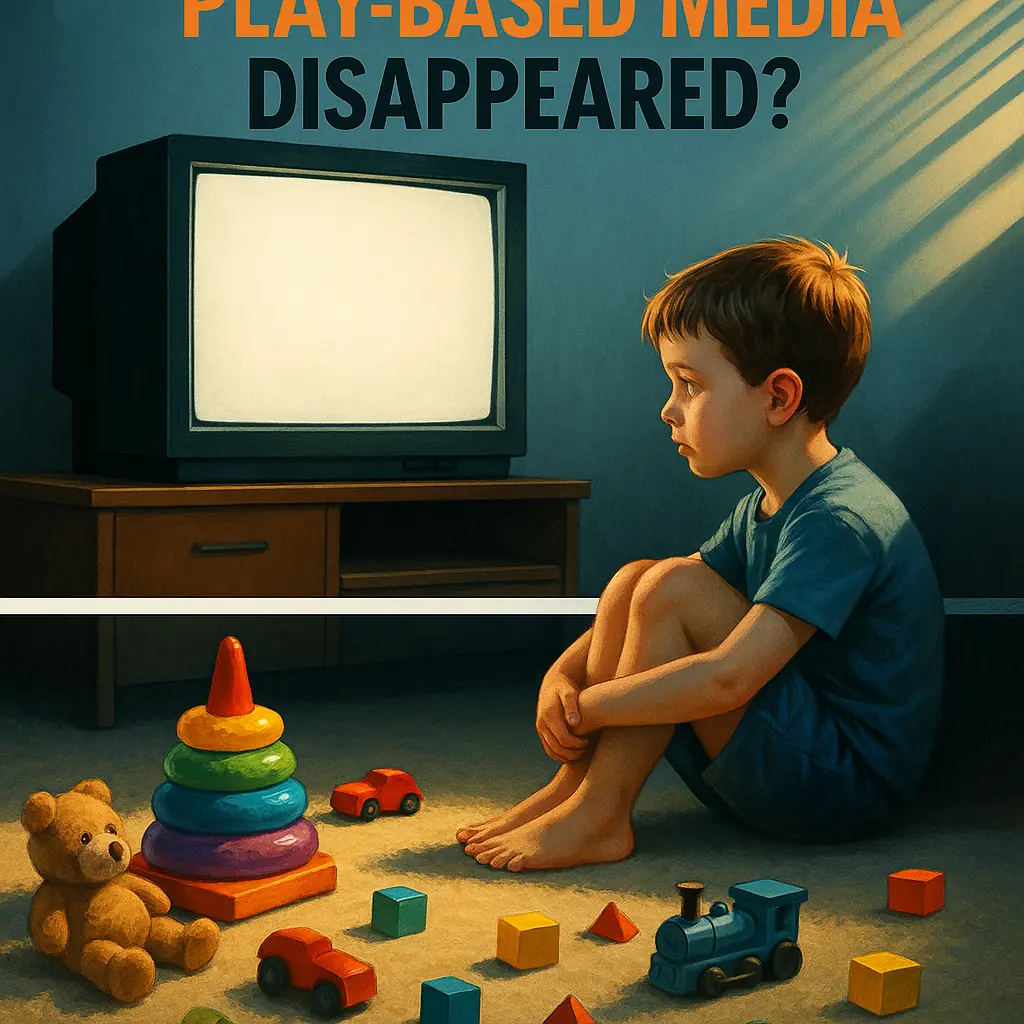
Imagine waking up to a world where every video game, every gamified app, and every interactive streaming platform has vanished overnight. Not a glitch, but gone. For millions those pixels and push notifications are how they relax, learn, meet friends, and rehearse skills.
Play-based media here means the digital and broadcast forms of play: console and mobile games, multiplayer online worlds, gamified learning apps, and interactive episodic content. Physical toys and analog board games still exist in this scenario, but the media layer that wires millions into shared virtual spaces is gone. The fallout would be messy, interesting, and partly hopeful. Here’s how it might unfold and how people could adapt.
Timeline of consequences
Shock, shortage, and first substitutions
Immediate reactions would be sharp. Servers stop answering. App icons go black. Gamers, kids, and casual users face a sudden social void. Social networks fill with confusion and rage. Customer support lines in the games industry melt down. Stock prices for entertainment and ad-dependent platforms tumble.
Practically, two things happen fast. People raid their homes for board games, puzzles, and craft supplies. Parents scramble for alternatives during after-school hours. Local libraries and toy shops see a spike in traffic. At the same time, mental-health hotlines report more calls from heavy users experiencing withdrawal-like symptoms.
Patchwork replacements and economic triage
Communities look for workarounds. Tabletop gaming scenes expand. Esports venues try to convert into LAN cafés running emulators or hosting analogue competitions. Educators and therapists accelerate the use of hands-on play for learning and social skills. Sales of board games and non-digital educational toys climb sharply.
On the economic side, game studios pivot or collapse. Advertising and streaming revenue tied to gameplay evaporate, causing layoffs across media firms. A cottage industry springs up around porting digital mechanics into physical form. Investors start betting on analog experiences and immersive real-world entertainment.
Shifts in child development, education, and culture
Schools that once supplemented lessons with gamified apps adapt by embedding more role-play, problem-based learning, and maker projects into classrooms. Some kids benefit from increased face-to-face play and outdoor activity. Others lose regular exposure to certain types of problem solving that games uniquely train, such as rapid spatial updates and complex systems thinking under time pressure.
Culturally, the language of play gets reshaped. Memes and online ritual persist, but the shared virtual worlds that created long-running mythologies and social rituals have faded. New subcultures emerge around analogue multiplayer experiences, competitive board gaming, and live-action role-play.
Stable replacements, lost skills, and new industries
After a decade, a hybrid landscape stabilizes. Physical and social forms of play are stronger in neighborhoods and classrooms. Industries have adapted; live experiences, escape rooms, and tabletop publishers are healthier. Yet some cohorts who grew up without digital play show subtle differences in certain cognitive and technical skills tied to interactive media.
Innovation patterns shift. Fewer people have intuitions forged in massive online worlds. Product designers and AI researchers lose a stream of behavioral data once harvested from games. That slows some kinds of rapid iteration in interactive design, but it also pushes creativity into material culture and public spaces.
What science says
Play is not frivolous. Decades of psychology and neuroscience show it shapes attention, executive function, social negotiation, and creative problem solving. Play-based media are a modern channel for those effects. Fast-action games improve certain visuospatial skills and perceptual decision-making, while simulation games let players practice resource management and systems thinking in compressed time.
Scientific evidence is mixed about transfer. Improvements in a trained task are real and replicable. Broad transfer to unrelated academic outcomes is modest. Socially, multiplayer play can teach collaboration, rule negotiation, and cultural literacy, but it can also magnify toxic behaviors when moderation is weak.
Removing play-based media would therefore have mixed consequences. Some measurable benefits tied to specific gaming experiences would decline for cohorts deprived of them. At the same time, you would remove exposure to problematic patterns like compulsive reward loops and toxic online interactions. Neural circuits shaped by repeated interactive practice would develop differently, but brain plasticity means other forms of play can pick up some of the slack. The balance between loss and compensation depends on access to high-quality substitute experiences.
Could anything survive?
People and institutions would adapt quickly, but smart choices reduce harm and accelerate recovery. Here are practical steps for different actors.
- Parents: Replace routine screen time with structured social play. Family game nights, outdoor free play, and cooperative building projects are highest priority. Keep novelty in rotation to maintain engagement, and watch for withdrawal symptoms in heavy users.
- Educators: Translate gamified curricula into low-tech variants. Use role-play, classroom quests, tangible badges, and iterative project cycles. Train teachers in facilitating open-ended and collaborative activities that mimic key learning affordances of digital play.
- Community leaders: Open public spaces for play. Libraries, parks, and rec centers can stock board games, maker kits, and organize tournaments or collaborative builds. Subsidize access for low-income neighborhoods to avoid widening disparities.
- Policymakers: Fund research into which cognitive and social skills are most at risk. Support mental health services for people experiencing screen-loss distress. Encourage industries to translate interactive mechanics into low-energy, in-person experiences.
- Entrepreneurs: There's money in tangible, social experiences. Invest in tabletop design, live events, and hybrid products that blend physical play with intermittent digital features that operate off the main networks.
Short-term triage matters. Calm routines, predictable social schedules, and accessible play alternatives prevent the worst impacts on children and socially vulnerable people. Over the long run, a conscious public push to expand diverse play opportunities will recover many of the educational and developmental gains currently delivered by digital play.