Survival meter
Imagine overnight streets waking to a surge of animals: rats in alleys, raccoons rifling through trash, feral cats clustering under stoops, flocks of pigeons filling plazas, and coyotes creeping into parks. Not a Hollywood monster. Just creatures following food, shelter, and safety into human spaces.
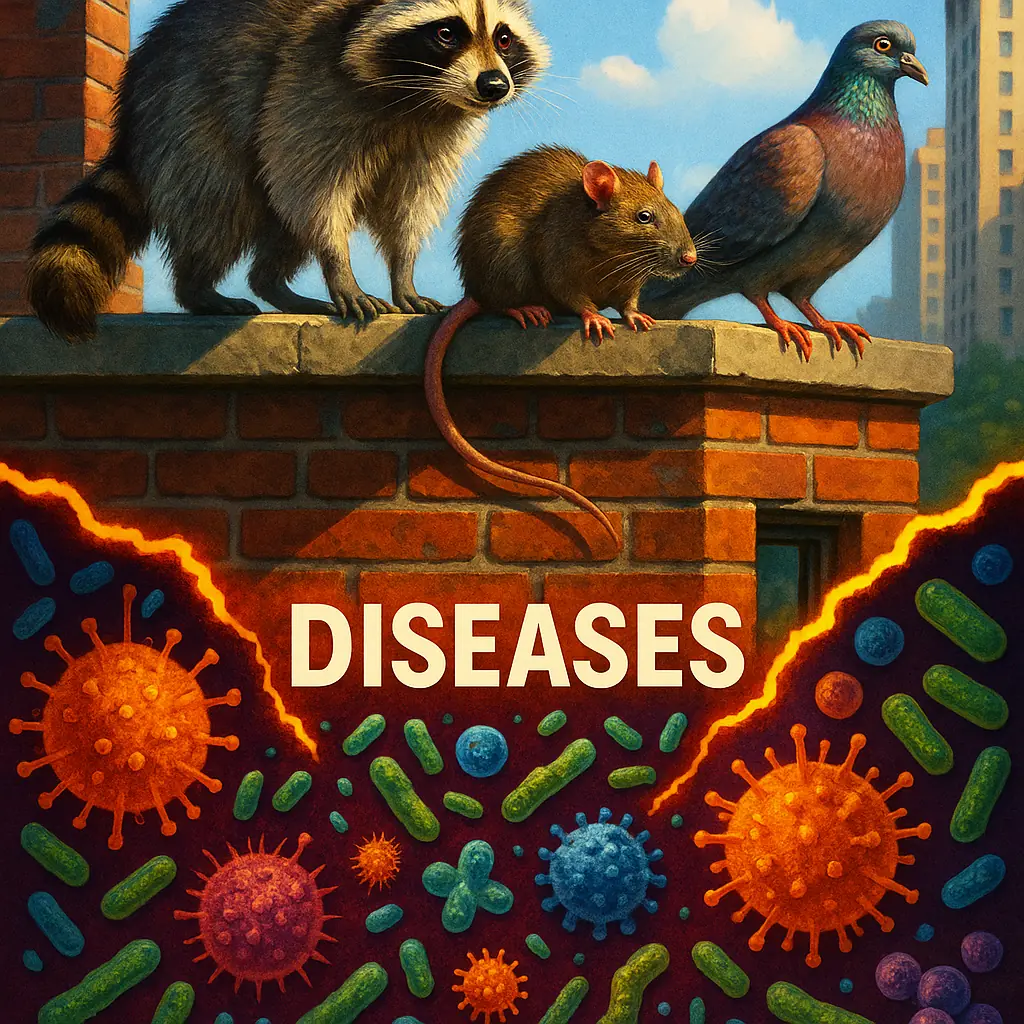
When wild and commensal animals crowd cities, pathogens follow. Some are minor irritants. Others can make people seriously ill. Here’s what would likely spread, how it would move, and how you or public health systems could respond.
Timeline of consequences
Initial shock, sanitation breaches
Trash overflow, smashed bins, and unsecured compost create feast zones. Rodent and mesopredator numbers spike around food points and transit hubs. Private and communal spaces are quickly contaminated with urine, droppings, and nesting materials.
Expect localized outbreaks of gastroenteritis from fecal contamination, and bite incidents as animals compete for resources.
First human cases and vector activation
Humans present with gastrointestinal symptoms, skin infections, and unexplained fevers. Fleas and ticks displaced from wildlife hosts begin biting people and pets. Mosquito breeding in standing water behind disrupted storm drains increases in summer months.
- Leptospirosis and Salmonella show up first in people with direct contact or contaminated water.
- Rabies exposures climb where bats, raccoons, and feral dogs are involved in bites.
Amplification, hospital stress, targeted outbreaks
Vector-borne diseases like West Nile virus and urbanized encephalitides grow where standing water and bird populations intersect. Hantaviruses can become a problem when rodent populations concentrate in enclosed spaces, like subway infrastructures and basements.
Hospitals see clusters of unusual presentations: unexplained pneumonia, febrile illnesses, and neurological symptoms. Public health teams roll out surveillance and vaccination campaigns for at-risk groups and animals.
Control measures, behavioral shifts
Municipal sanitation, targeted pest control, and vector reduction programs start to bend curves. Communities alter behaviors: people secure waste, repair building access points, and avoid feeding wildlife. Pet vaccination and neutering programs reduce feral populations over time.
Some pathogens remain endemic at low levels, circulating in urban wildlife and occasionally spilling into humans.
New steady-state, ecosystem consequences
Cities find a new balance. Certain zoonoses become part of the urban public health landscape, monitored like seasonal influenza. The urban ecosystem changes: predators may dance closer to human food sources, and some native species decline or rebound depending on control strategies.
Long-term ecological shifts influence future spillover risk.
What science says
Pathogens likely to surge fall into several categories: bacteria, viruses, parasites, and fungal agents. Transmission routes matter. Direct contact spreads bites and scratches. Fecal contamination spreads gastrointestinal pathogens. Vectors such as fleas, ticks, and mosquitoes move diseases between animals and people. Aerosols from dried rodent urine can cause severe lung disease in a subset of infections.
Key agents to watch:
- Leptospira: Bacteria passed in urine from rodents, raccoons, and opossums. Causes febrile illness, sometimes severe kidney or liver damage. Risk rises with contaminated puddles, basements, and floodwaters.
- Salmonella and Campylobacter: Enteric bacteria from bird and rodent droppings and contaminated food. Expect increased gastroenteritis and foodborne outbreaks if food storage is compromised.
- Hantaviruses: Carried by rodents, spread through aerosolized droppings and urine. Can cause hantavirus pulmonary syndrome, a serious respiratory illness, after heavy exposure in enclosed spaces.
- Rabies: Viral, almost always fatal if untreated once symptoms start. Urban bites from bats, raccoons, and feral dogs or cats raise exposure risk. Post-exposure prophylaxis prevents disease when given promptly.
- Flea- and tick-borne pathogens: Yersinia pestis, Rickettsia species, and Borrelia (Lyme) can move into urban cycles if flea and tick populations rise on rodents and mesopredators.
- Arboviruses: West Nile virus and related encephalitides amplify if birds and mosquitoes find urban breeding niches. Standing water and dense bird populations are a dangerous pairing.
- Toxoplasma gondii and Toxocara: Parasites from cat and dog feces, respectively. They can contaminate soil, parks, and playgrounds and pose a particular threat to pregnant people and young children.
- Bartonella henselae: From cats via scratches or fleas, causes cat-scratch disease and more severe disease in immunocompromised people.
Urban infrastructure affects spread. Sewer networks, subway tunnels, and derelict buildings are refuges for rodents. Poor waste management concentrates animals. Climate patterns shape vector seasons. Socioeconomic factors amplify human exposure where housing is inadequate or services have lapsed.
Could anything survive?
Individuals and cities have different levers to reduce risk. Quick, targeted actions blunt the worst outcomes.
Individual steps:
- Avoid contact with wild animals. Do not feed them. Secure trash and compost with animal-proof containers.
- Fix entry points in buildings. Seal gaps around plumbing, vents, and doors where rodents can enter.
- Practice hand hygiene, especially after touching outdoor surfaces. Wash produce that spent time outdoors.
- Keep pets vaccinated, dewormed, and on flea/tick prevention. Avoid letting pets roam freely during outbreaks.
- If bitten or scratched, wash the wound and seek medical care immediately for assessment of rabies risk and other infections.
Community and public health actions:
- Rapid surveillance. Test animals and people showing unusual symptoms, and map cases to identify hotspots.
- Sanitation and waste control. Increase trash pickup, use sealed bins, and remove illegal dumps that attract wildlife.
- Targeted pest control. Use integrated pest management to reduce rodent and mesopredator numbers while limiting non-target harm.
- Vector reduction. Eliminate standing water, treat breeding sites, and deploy larviciding in high-risk zones when necessary.
- Vaccination and prophylaxis. Mass rabies vaccination of domestic animals and post-exposure prophylaxis for humans after exposures save lives. Consider targeted human vaccines where appropriate and available.
- Public communication. Clear, repeated messages about avoidance, wound care, and when to seek help reduce panic and risky behaviors.
Healthcare systems need surge plans. Labs must be ready for zoonotic diagnostics. Shelters and homeless services are critical partners because outbreaks often intersect with vulnerable populations. Expect that full control will take months, and long-term monitoring is essential to prevent re-emergence.