Survival meter
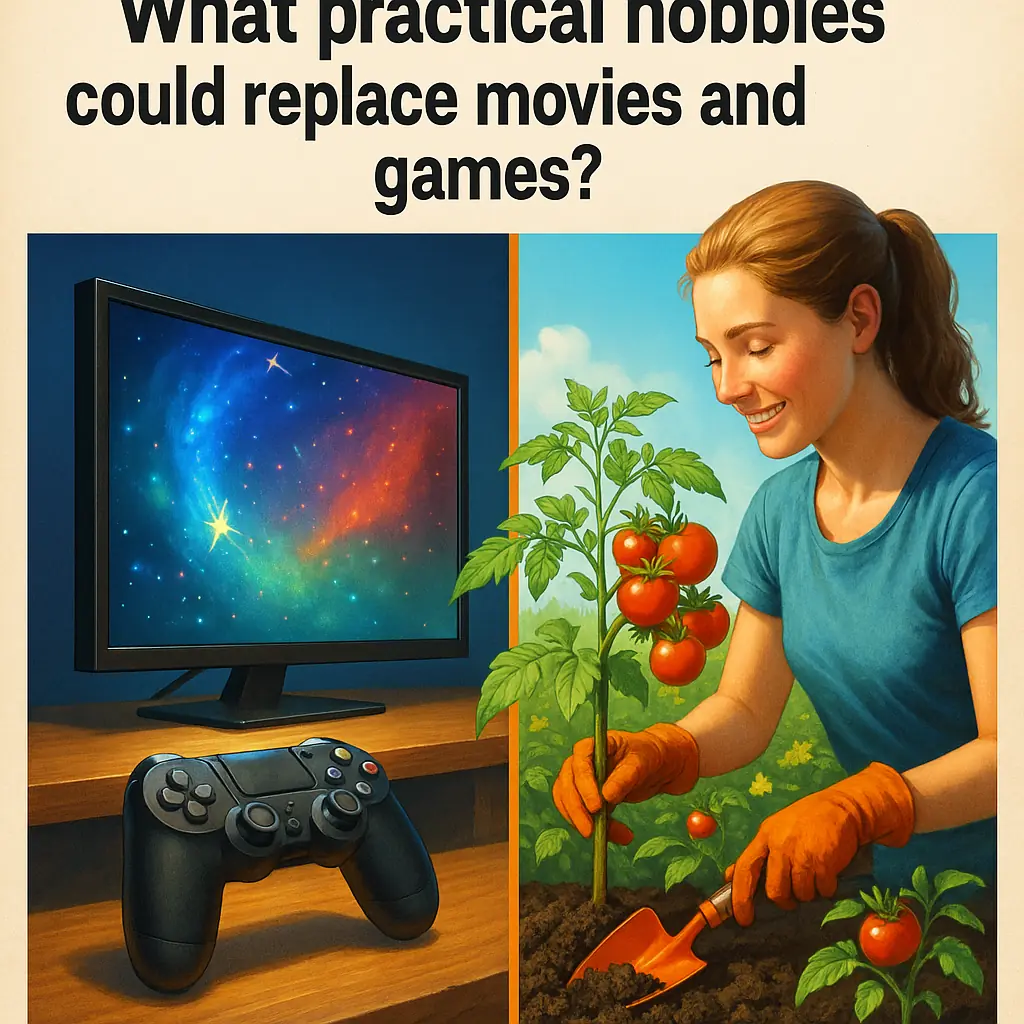
Imagine evenings without scrolling, weekends that produce something useful, and social time that teaches a skill instead of delivering plot twists. Swap passive screen hours for hands-on pursuits and you change how people spend attention, money, and free time. The shift would not be instant, but its ripple effects would touch mental health, local economies, and everyday resilience.
This page maps practical hobbies that could realistically stand in for movies and games, explains why they satisfy the same human urges, and lays out how a society would actually make the swap work.
Timeline of consequences
Small swaps and low friction starts
People try short, low-commitment projects that mimic screen rewards. Think a 30-minute baking recipe instead of an episode, a 20-minute woodworking quick build, or a daily language app session with a mini-prize for streaks. Local makerspaces and community centers run taster events. Employers encourage single-hour hobby breaks to test productivity effects.
- Quick wins: cooking one new recipe per week, small plant care, beginner knitting kits.
- Why it sticks: fast sense of progress, tactile feedback, social bragging rights.
Habit formation and social infrastructure
People who enjoy initial trials build routines. Neighborhood groups form around repair cafes, community gardens, and board-game nights that require thought but not passive watching. Libraries lend tools and instrument kits. Local businesses notice demand for hobby supplies and short classes, creating micro-economies around makers, tutors, and co-op workshops.
- Outcomes: improved skills in trades, more shared spaces, new social hubs.
- Risks: unequal access if communities lack funding or space.
Skill clusters and cultural shift
As more people invest hours in hands-on work, norms shift. Birthdays mean toolkits and seedlings, not movie marathons. High school electives and after-school programs emphasize practical arts and repair skills. Streaming hours decline in measurable segments; leisure spending reallocates to durable goods and classes. Some small businesses pivot to hybrid entertainment-hobby models: pub workshops, chef-hosted dinners, interactive repair nights.
- Benefits: higher baseline of practical knowledge, expanded local barter and service economies.
- Downsides: industries built around screens adapt and push back with more interactive content.
Resilience and new lifeways
If the trend scales, communities gain distributed skills that matter under stress. More people can fix, grow, or fabricate essentials. Energy and material consumption patterns change subtly; DIY repairs prolong product lifespans. Cultural memory shifts toward craft pride and apprenticeship. Entertainment still exists, but is more often combined with doing rather than just watching.
- System-level effects: stronger local supply chains, slower replacement cycles, different workforce skill mixes.
- Limits: inequality in leisure time and resources means adoption would be uneven.
What science says
Why would practical hobbies replace screen-based entertainment? They satisfy the same psychological drives: novelty, competence, social bonding, and flow. Neurobiology shows that accomplishing a real task triggers dopamine and endorphins in ways that are similar to winning in a game. Repeated skill practice also engages neuroplasticity, creating durable mental benefits rather than fleeting pleasure spikes.
Active leisure correlates with better mental health in population studies. Hands-on activities lower perceived stress, improve attention span, and boost mood. Physical hobbies add cardiovascular and motor benefits that passive viewing cannot. Social capital research links neighborhood workshops and co-ops to greater civic engagement and mutual aid networks.
There are trade-offs. Media industries deliver highly optimized reward loops and near-zero friction. Practical hobbies must overcome setup time, learning curves, and sometimes cost. Randomized trials suggest habit nudges and social scaffolding are effective: buddy systems, micro-rewards, and accessible public spaces greatly increase sustained participation.
Could anything survive?
If you want to swap screen hours for practical hobbies yourself, here is a practical playbook that works at scale and at home.
- Start with one-hour experiments. Try one new hobby for four weeks, three sessions a week. Short, repeated trials beat binge attempts.
- Pick high-reward, low-barrier projects. Gardening in containers, simple woodworking, basic bike maintenance, bread baking, and coding small scripts all show quick progress and tangible outputs.
- Join or build social structures. Repair cafes, skill swaps, and co-op workshops supply tools, reduce cost, and provide accountability. Public libraries and community centers often host free classes.
- Design for reward. Track progress visibly. Share failures as well as wins. Micro-celebrations keep motivation higher than solitary grind.
- Reduce friction. Keep a hobby kit ready. Premeasure ingredients, prepack tools, dedicate a small workspace. Friction is the main killer of new habits.
- Mind safety and inclusion. Learn proper tool safety, take classes for hazardous tasks, and make space for beginners in community groups. Offer sliding-scale fees or tool-lending to avoid excluding low-income participants.
- Measure impact. Track hours, skills learned, and how many items you repair or produce. If replacing screen time is the goal, log entertainment hours and swap them one-to-one initially.
At a societal level, policies amplify adoption: tax credits for makerspaces, school curricula reforms, public tool libraries, and incentives for businesses that run hands-on community programs. Hobbies will not fully replace media consumption, but they can reduce harmful overuse and build practical capacity that pays dividends in health and resilience.