Survival meter
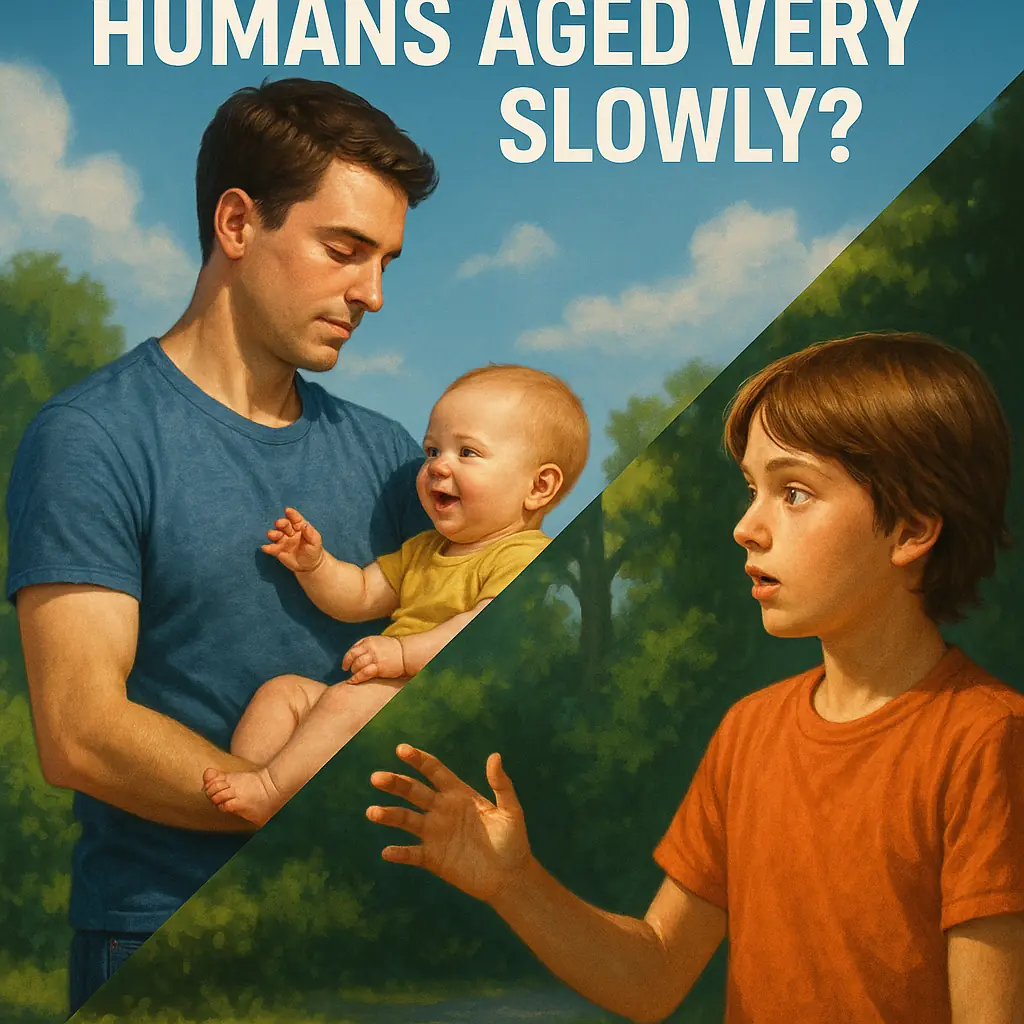
Imagine waking up at 40 and still looking and feeling 17. Imagine grandmothers coaching apprentices for a century. Slow aging would rearrange lives and institutions faster than you think. The body changes, but so do families, economies, politics and the planet.
We'll map the biological pathways that could make slow aging possible, sketch the social fallout, and offer practical moves people and governments would want to make if human years stretched out for generations.
Timeline of consequences
Individual health and lifespan shift
People would notice fitter joints, clearer skin, and slower cognitive decline in middle age. Disease curves change: many late-onset conditions like Alzheimer’s and type 2 diabetes could appear decades later or with lower incidence. Mortality falls at older ages, and average lifespan climbs. Insurance companies and pension funds would scramble to reprice risk.
Family structure and fertility
Generations overlap more. Parents might postpone having kids for decades, or expand family size. Fertility may remain the same biologically, leaving birth rates ambiguous: some people delay, others have more children over a longer reproductive window. Family planning, education and child-care markets would shift to serve lifelong learners rather than fixed-age cohorts.
Economy and work
Careers extend. Retirement as we know it fragments. Employers face longer tenures, slower turnover, and larger lifetime salaries per worker. Wage structures and promotion ladders could compress, then reset. Capital accumulation concentrates as older cohorts hold wealth longer, raising political tensions over asset taxation and inheritance rules.
Politics and cultural change
Older voters stay active, and cultural change slows when long-lived cohorts retain influence. Policy battles over resources, taxation and social norms harden. But institutional memory improves; governments may become less prone to repeated policy mistakes. New political movements could form around generational access to opportunity.
Demographics and urban planning
Population growth depends on fertility trends. If people don't reduce births, global population could swell, straining food, water and energy systems. Cities would redesign housing, transport and health services for very long lives. Education systems move from age-based to lifelong modular training.
Evolutionary and ecological feedback
Natural selection dynamics shift slowly. With reduced generational turnover, biological evolution and cultural evolution both slow. Long human lifespans change resource demand patterns and could amplify human impact on ecosystems unless technology or behavior adapts. Decades-long cultural knowledge banks build up, preserving skills and techniques over centuries.
What science says
Slow aging means the body accumulates damage more slowly. Aging is not one single process. It is a set of mechanisms that push cells and tissues toward failure over time. To slow the clock you can act on several of those mechanisms at once.
Key targets researchers study today include telomere maintenance, DNA repair fidelity, mitochondrial function, proteostasis, stem cell exhaustion, chronic inflammation, and cellular senescence. Intervening on any one mechanism can help, but real slowing probably requires combinations. That is why researchers test cocktails of drugs, genetic tweaks, and lifestyle changes together.
We already see organisms with extreme longevity. Greenland sharks, some turtles, and bristlecone pines age very slowly. Naked mole rats show resistance to cancer and longer healthspans compared with similar-sized rodents. These species provide biological clues, but they are not blueprints for humans.
What could make humans age very slowly? Possible routes include improved DNA repair enzymes, therapies that clear senescent cells regularly, epigenetic reprogramming to reset cellular age marks, enhanced stem cell maintenance, and metabolic shifts that lower oxidative damage. Caloric restriction and drugs that mimic its effects, like rapamycin or metformin, show life- and healthspan benefits in animals. Senolytic drugs that remove worn-out cells extend healthy life in rodents.
Risks and trade-offs matter. Slowing cell-cycle checkpoints or boosting repair could increase cancer risk unless done with precise control. Extending reproductive windows interferes with evolution: fewer generations slow adaptive evolution. Ecological consequences could be large if population numbers rise. The science is promising but far from an instant cause of immortality. Expect slow, incremental advances rather than sudden, worldwide slowing of aging.
Could anything survive?
If slow aging became common, people and institutions would need to adapt fast. The moves below help individuals keep options open and help societies steer outcomes toward equity and sustainability.
Personal steps
- Plan careers as multi-stage ecosystems, not one linear climb. Save and invest with many more working years in mind.
- Maintain flexible family plans. Fertility counseling and storage options gain value if reproductive choices spread over decades.
- Focus on lifelong learning and skill rotation. Skill obsolescence becomes the big career risk, not age discrimination alone.
- Prioritize healthspan. Even with slow aging, exercise, sleep and metabolic health extend the quality of long lives.
Policy and societal steps
- Redesign pensions and social insurance to account for longer work lives and compressed career progression. Consider phased retirement and lifetime income smoothing.
- Tax and inheritance reform to prevent extreme wealth freezing across centuries. Circulate wealth to avoid political lock-in by elderly cohorts.
- Invest heavily in sustainable food, water and energy. Longer lives raise cumulative consumption unless productivity and resource efficiency outpace demand.
- Upgrade governance and civic education to handle slower cultural turnover. Ensure institutions can adapt when power concentrates in long-lived demographics.
- Expand access to reproductive health and family planning, plus urban planning that scales with different population scenarios.
On the global level, prepare for uncertainty. Slow aging would produce winners and losers. The fairest outcomes require early, transparent policy choices rather than leaving market forces to decide who benefits.