Survival meter
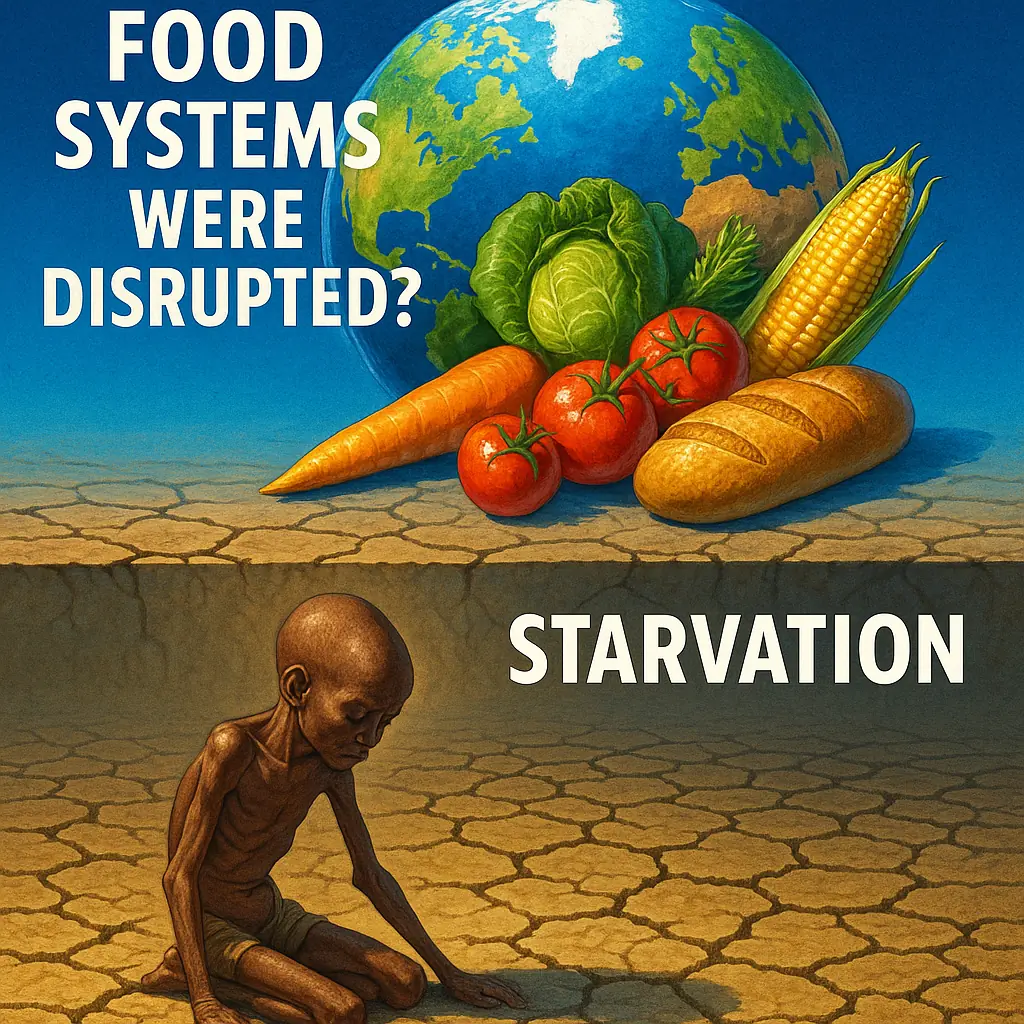
Food networks link farms, trucks, ports, factories, and stores into a single global web. If that web frays, the effects are immediate and messy. Prices spike. Shelves go bare. Social order strains. Some areas adapt fast. Others face hunger and unrest.
Here’s a clear-eyed look at how a systemic disruption could unfold, why it happens, and what people, cities, and nations can do to survive the shock.
Timeline of consequences
Empty shelves and panic buying
Supermarkets and convenience stores see sudden shortages of staples: bread, rice, cooking oil, canned goods. Panic buying amplifies gaps created by just-in-time logistics and thin inventories. Perishable supply chains break first because trucks, cold storage, and packing plants are tightly timed.
Local farmers may have produce to sell, but distribution logistics and labor shortages prevent rapid redirection of food to cities. Digital platforms and payment systems may work, but there is no substitute for physical transport.
Price spikes, rationing, and social strain
Wholesale prices climb as supply tightens and imports falter. Governments impose export controls, making shortages worse elsewhere. Vulnerable households cut meals or switch to lower-quality calories. Urban poor and informal workers are hit hardest.
Schools and hospitals may run short of staples. Local governments start rationing and emergency food distributions. Food-related protests and strikes increase in frequency and intensity.
Agricultural cascades and fertilizer crunch
If the disruption affects fertilizer, fuel, or critical inputs, planting and harvest cycles suffer. Farmers cut acreage, delay sowing, or apply less fertilizer. Yields drop in the next season, deepening shortages.
A lack of spare parts, fuel for tractors, or agrochemical supplies causes cascading failures across regions that rely on industrial agriculture. Food prices remain volatile and localized famines emerge.
Economic and political realignment
Persistent shortages force structural change. Some countries shift toward import substitution and support for small-scale farming. Others experience political turmoil as governments lose trust. Trade patterns reconfigure: new regional corridors form, old global links shrink.
Urban food systems adapt with community gardens, urban greenhouses, and scaled-up local markets. Yet not every city recovers equally; wealth and governance determine outcomes.
A different human landscape
Long-term outcomes split by policy and environment. Systems that invest in soil recovery, diverse crops, and decentralized logistics stabilize and recover. Regions that double down on monoculture and fossil-fuel-heavy inputs face recurring crises and degraded soils.
Globally, dietary patterns shift where meat and processed foods become luxuries again in many places, while plant-forward diets and fermented, preserved foods become more common.
What science says
Modern food systems run on a few tight threads: fertilizer, fuel, freshwater, and transport. Synthetic nitrogen fertilizer supports roughly half the global population, and it requires natural gas or other energy to make. When energy or supply chains fail, fertilizer production and distribution drop fast.
Monocultures, long-distance trade, and storage-weak supply chains raise vulnerability. A single weather shock or logistics hiccup can ripple because there are few redundant producers and little slack capacity. Perishable foods depend on cold chains that use diesel and electricity; when those break, losses accelerate.
Crop yields are also shaped by soil health and biodiversity. Intensive farming can give big yields in the short term, but it erodes resilience. Diverse cropping systems, cover cropping, and integrated pest management reduce input needs and buffer against pest outbreaks and variable weather.
Global trade masks local deficits. Many cities have tiny reserves of staple calories. The average supermarket holds only days of inventory because just-in-time transport keeps costs down. That model is efficient, not resilient.
Could anything survive?
If supply chains wobble, preparatory action matters more than luck. There are practical choices for individuals, neighborhoods, and governments.
Individuals and households
- Build a 14 to 30 day pantry of nonperishables: rice, beans, oil, salt, sugar, canned proteins, and basic spices. Rotation keeps food fresh.
- Learn simple food-preservation skills: canning, drying, fermenting, smoking. They extend calories and cut reliance on cold storage.
- Grow what you can. Even small container gardens cut grocery needs and provide fresh micronutrients. Prioritize easy, calorie-dense crops like potatoes, beans, and sweet potatoes.
Communities and cities
- Create local food hubs that connect surplus from farms to urban consumers with short supply chains and shared cold storage.
- Support urban agriculture at scale: community gardens, rooftop greenhouses, and school farms. These stabilize access and build skills.
- Set up emergency food distribution nodes and clear distribution plans, including vouchers for vulnerable households and targeted feeding programs for children and elderly.
Governments and industry
- Maintain strategic reserves of staple grains, edible oils, and critical inputs like fertilizer, seed, and fuel for agriculture.
- Invest in diversified domestic production and regional trade corridors so a failure in one zone does not collapse supply everywhere.
- Reduce fragility by subsidizing soil-building practices, crop diversity, and smaller storage and processing facilities distributed across the landscape.
Don't expect quick fixes. Short-run measures buy time. Longer-term resilience requires shifting policy toward diversified diets, regenerative agriculture, and robust local logistics.