Survival meter
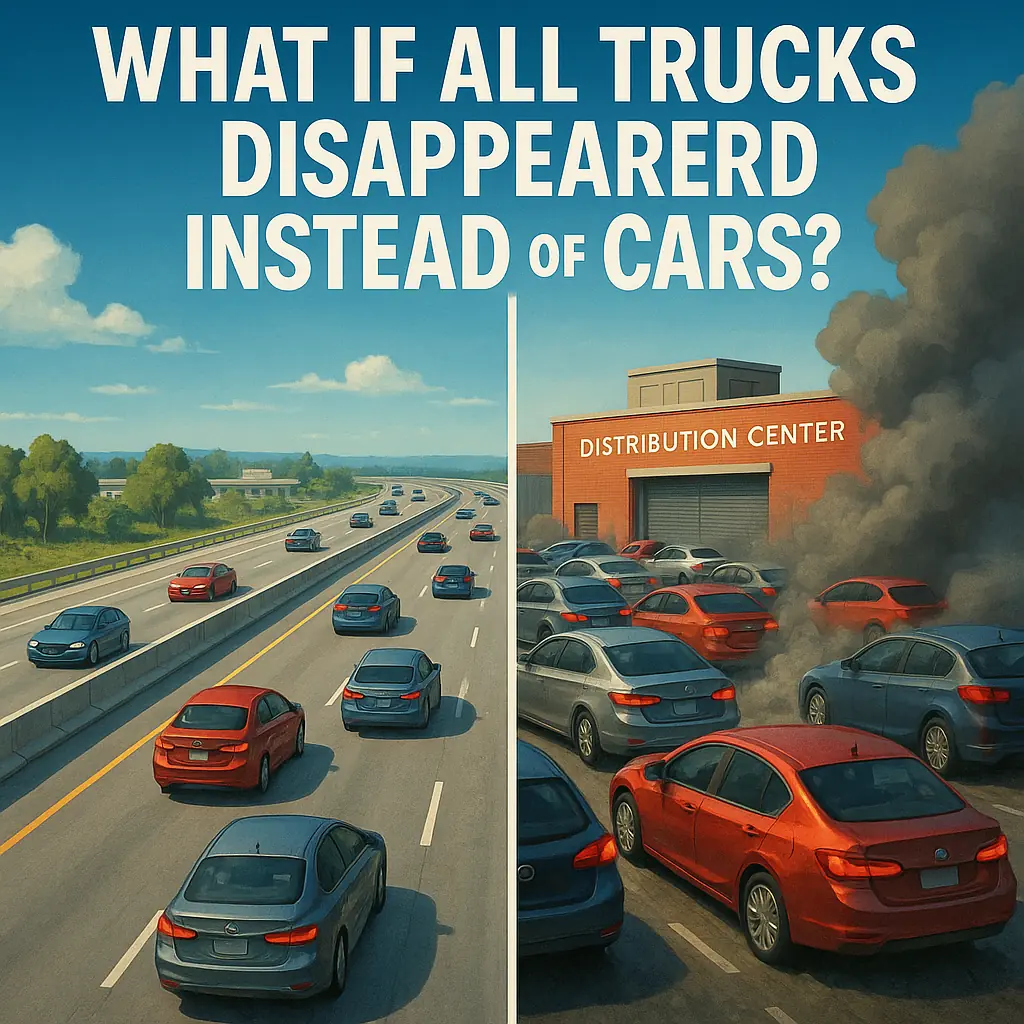
Imagine the planet wakes up and every truck has vanished. Not a single semi, pickup, delivery van or garbage truck left on the roads. Cars remain. Life keeps moving, but everything that moves stuff has been erased.
The math is simple and the consequences are anything but. Trucks haul the skeleton of modern logistics. Take them away and messages stop arriving at the right inbox. Groceries, construction materials, fuel, hospital supplies, mail and municipal services all face a cliff. Here’s what would unfold, why it would hurt, and how people could cope.
Timeline of consequences
Immediate confusion, short-term disruptions
Traffic looks normal at first because most personal cars still drive. Then roads get quieter where trucks used to thunder. Commercial parking lots, freight terminals and distribution centers sit empty. Supermarket shelves stay full for a little while, but staff notice vans and pallet jacks are missing.
Critical services lose access to daily supplies. Many ambulances and fire apparatus are technically trucks, so emergency response in cities and suburbs can be degraded. Trash pickups miss a run. Airports and seaports keep operating, but goods can't move inland by road.
First shortages: fresh food, medical consumables, fuel
Supermarkets begin rationing perishables in high-turnover areas. Hospitals lean on stockpiles for intravenous fluids, gloves, personal protective equipment and certain medicines. Gas stations that rely on tanker trucks see pumps go dry after a day or two. Local stores with on-site storage can limp along, but supply chain routes are broken.
- Restaurants scale back menus or close.
- Garbage accumulates in urban neighborhoods.
- Courier services collapse for most parcels.
Secondary effects: industry and retail feel the pinch
Manufacturing that depends on daily deliveries slows or halts. Car dealerships and repairs struggle without replacement parts. Construction projects pause when lumber, cement and fixtures stop arriving. Grocery chains shift to conservative ordering and try to reroute via rail and waterways, but capacity is limited. People start improvising: cars towing small trailers, neighborhoods pooling resources, informal markets appear.
Systemic strain: hospitals, utilities and winter impacts
Hospitals face elective surgery cancellations due to supply and staffing bottlenecks. Power utilities confront maintenance gaps because heavy service trucks are gone. If winter arrives during this window, heating fuel shortages become life-threatening in colder regions. Strategic reserves and military logistics help, but they were designed for short disruptions, not indefinite replacement of an entire vehicle class.
Economic ripple: fewer goods, higher prices, shifting transport
Supply chains reorganize around remaining modes: rail, inland waterways and air freight where affordable. Rail hubs expand their role, but rails serve only certain corridors and stations. Small-scale manufacturing and local food systems surge. Industries that can adapt to stock buffer strategies survive better. Wages for remaining transport workers jump, but inflation and unemployment rise in sectors tied to trucking.
Adaptation, innovation and painful losses
Cities and businesses redesign logistics. Cargo-carrying cars, electric cargo bikes, and human-scale last-mile solutions become common. Rail and maritime infrastructure are upgraded in regions that can afford it. Some companies relocate production closer to consumers. Other businesses fail. Urban design shifts to keep services within walking or biking distance. Rural areas suffer more, lacking alternate transit and storage density.
A transformed transport landscape
Humanity builds new systems rather than restoring the old. Where rail corridors and ports were strong, economies stabilize faster. Some functions previously done by heavy trucks are replaced by localized manufacturing, electrified rail freight and fleets of lighter, specialized cargo vehicles derived from cars. The transition reduces certain emissions but raises social costs during the shift. Expect long-term regional divergence: winners adapt, losers shrink.
What science says
Trucks are efficiency machines. A single long-haul semi can carry 20 to 26 standard pallets and tens of thousands of pounds of goods. Compare that to a passenger car, which might carry a few grocery bags. Logistics are built on high payload-to-driver ratios. Remove trucks and you remove both payload capacity and the labour trained to move it.
Freight moves by a chain of links, each designed for volume. Containers flow from ships to trucks to distribution centers and then to vans for local delivery. Rail handles high-volume, point-to-point corridors well, but rails need terminals and drayage trucks to finish the job. Inland waterways are excellent where rivers and canals exist, but they are slow and geographically limited. Air freight picks up the slack for critical, light, high-value items, but cost limits scale.
Another layer is infrastructure. Many municipal services depend on heavy vehicles: sewer cleaning rigs, garbage haulers, bucket trucks for electrical work. Fuel distribution itself largely depends on tanker trucks. If heavy trucks vanish, so does the immediate ability to deliver diesel and gasoline to retail pumps unless pipeline and depot systems are reconfigured to push fuel via rail or local stores.
Finally, the workforce matters. Truck drivers are a large, mobile labor pool. Retraining or replacing that workforce takes time. Spare-part inventories and scheduled maintenance cycles assume steady, predictable flows. A sudden loss would create cascading shortages even for durable goods whose parts still exist in the economy.
Could anything survive?
Short-term survival means buying time. Long-term survival is about reconfiguring how communities move and store essentials. Here are practical actions for individuals, neighborhoods and local governments.
- Stock smart, not excessive. Keep two to four weeks of food and medications, focusing on nonperishables and items you actually use.
- Prioritize energy. If you rely on delivered heating oil or propane, contact suppliers now and organize community bulk purchases. Explore heat conservation methods.
- Form neighborhood logistics groups. Share vehicles and drivers, coordinate bulk buying, and set up distribution points to reduce wasted trips.
- Use alternative transport. Cargo bikes, trailers for cars, rail freight tickets where available, and inland waterways can be surprisingly effective locally. Harness community volunteers for deliveries to vulnerable residents.
- Preserve medical supplies. Hospitals and clinics should implement strict triage and conservation protocols early. Track inventories and deploy mobile clinics if possible.
- Secure water and waste. If garbage trucks stop, prioritize waste reduction and home composting. For water, ensure local reservoirs, wells and treatment plants have maintenance access via alternative equipment.
- Support local production. Farmers, bakeries and small manufacturers can buffer supply if given procurement priority and access to markets.
For policymakers, the checklist is heavy: run contingency fuel distribution using rail and depots, declare critical infrastructure exemptions, subsidize rail and inland shipping capacity, and create temporary licensing to repurpose passenger vehicles for freight. Rapid triage and clear priorities save lives, while long-term investment rebuilds resilience.