Survival meter
Sea level is rising, storms are getting wilder, and many cities sit where water wants to be. Engineers are already building defenses, but what would it look like if society treated permanent flooding as a predictable challenge and designed whole cities around resisting or accommodating the water?
Here I map the practical engineering choices, the tradeoffs, and the human consequences. Expect concrete: seawalls and pumps. Expect soft science: wetlands and policy. Expect tradeoffs: expensive maintenance, displaced communities, and ecological damage if done wrong.
Timeline of consequences
Shoring up the weak spots
Rapid action focuses on emergency hardening and behavior change. Cities deploy mobile flood barriers, improve pump capacity for known flood-prone districts, and secure critical infrastructure such as hospitals, power substations, and wastewater plants. Building codes get updated for higher flood floors and mandatory floodproofing of ground-level utilities.
At the same time planners expand natural buffers: restoring marshes, planting mangroves where climate allows, and creating temporary floodable parks that can absorb stormwater while giving recreational space between events.
Integrated systems and strategic elevation
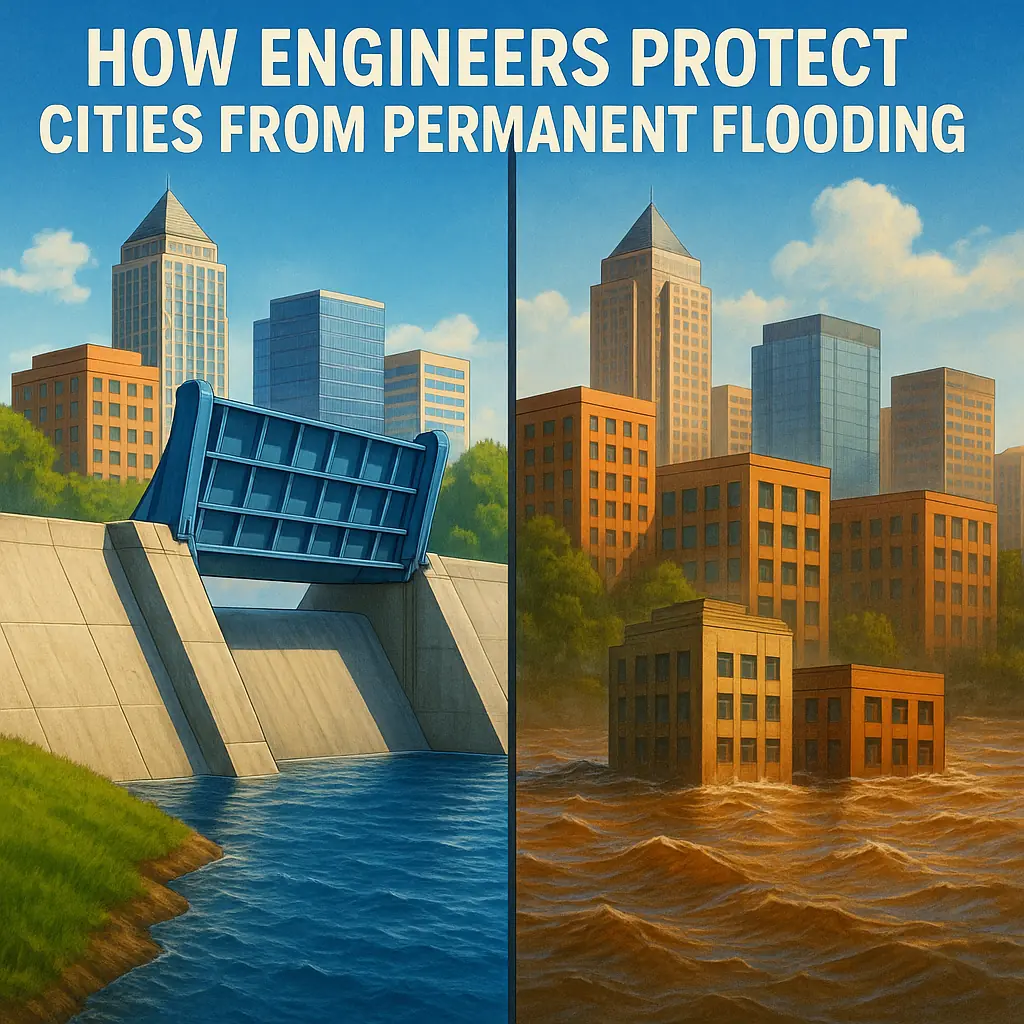
Engineers move from patchwork fixes to layered defenses. Coastal cities add permanent barriers such as levees and storm surge gates. Drainage networks are redesigned to handle higher baseline sea levels and more intense rainfall, with pumps backed by resilient power supplies. Critical road and rail segments are raised or rerouted above predicted high-water lines.
Policies begin to nudge retreat in the most expensive locations. New construction is concentrated on elevated platforms and islands, while flood-prone neighborhoods get buyout offers and incentives for voluntary relocation.
Transforming urban form
At this stage many cities look different. Whole districts are reconstructed on decks, piers, or elevated landforms. Floating neighborhoods and amphibious houses move from prototypes into neighborhood-scale deployments in select places. Large movable barrier systems and tidal control structures operate routinely, protecting harbors and river mouths.
Economic decisions drive uneven outcomes. Wealthier districts get layered defenses and permanent elevation. Lower-income areas either adapt communal floodproofing or face managed retreat, depending on political will and funding.
Living with engineered water
Some cities become effectively waterproof through continuous investment and maintenance. Others are partially abandoned and rewilded, converted into tidal wetlands that buffer inland communities. Long-term choices are shaped by maintenance costs, shifting coastlines, and whether sea-level rise slowed by emissions reductions or continued accelerating.
Where defenses persist, they need constant renewal. Sea level does not stop; the price is perpetual vigilance and energy for pumps and gates.
When engineering can't keep up
Even the best defenses can be overwhelmed by extreme events or gradual loss of political will. Catastrophic failure triggers rapid evacuations, social unrest, and decades of lost infrastructure. Some regions respond with rapid retreat corridors and assistance programs. Others fragment into informal settlements clinging to higher ground.
Failure is more likely where maintenance was deferred, funding was scarce, or subsidence accelerated. The political cost is high and recovery is slow.
What science says
Sea level rises for two main reasons: thermal expansion of warming oceans and melting ice. Local rates vary a lot because the land under cities moves too. Groundwater extraction and groundwater compaction make some delta cities sink, adding centimeters or meters to local relative rise. Storm surges and higher tides ride on top of that baseline increase, so a once-rare coastal flood becomes frequent.
Engineers use three broad physical strategies to protect cities: keep the water out, move the water through or around the city, or give the water places to go that do less damage.
- Barriers and gates: Seawalls, tide gates, and movable storm barriers block surge. They work when maintained, but they change currents and sediment transport, often accelerating erosion down-drift.
- Pumps and drainage networks: In low-lying areas, active pumping is essential. Pumps require power and redundancy. When electricity fails, so does the defense.
- Elevation and building design: Raising houses, critical infrastructure, and roads buys time. Designing ground floors to flood without harming systems reduces loss.
- Nature-based solutions: Marshes, mangroves, and dune systems absorb wave energy and trap sediment. They are resilient and cost-effective per unit of protection area, but they need space and time to establish.
- Managed retreat and land-use change: Sometimes the cheapest long-term option is to stop building in the hazard zone. That requires policy tools and social programs to move people and economies.
Every choice has tradeoffs. Hard structures can protect concentrated assets but create ecological damage and require endless upkeep. Natural systems are flexible but need space and may not match extreme events. The optimal approach mixes tactics into defense-in-depth, tailored to local geology, hydrodynamics, and social context.
Could anything survive?
If you live in a city protected against permanent flooding, your everyday life will be shaped by both physical changes and new routines. The good news is engineers can reduce risk substantially. The catch is maintenance, power, and social equity.
What individuals and communities should do now:
- Know your flood zone and evacuation routes. Make a household flood plan and practice it annually.
- Prepare an emergency kit with at least three days of food, water, batteries, copies of documents, and a backup power source if you rely on electric pumps or medical devices.
- Elevate utilities where possible, and retrofit ground floors to be flood tolerant: use water-resistant finishes, place HVAC and electrical panels above predicted flood levels.
- Buy adequate insurance if it is available and affordable. Insurance transfers some risk but does not replace planning for displacement.
- Engage with local planning. Public pressure shapes whether funds go to equitable retreat, levee upkeep, or new developments on higher ground.
For community-level resilience:
- Maintain backup power for pumps and critical services, with fuel or battery redundancy.
- Design shared floodable spaces such as parks and plazas that can absorb water without destroying infrastructure.
- Create clear relocation pathways and financial support for residents of chronically flooded neighborhoods.
- Invest in natural buffers that provide co-benefits: fisheries, recreation, and carbon storage.
Likely versus speculative outcomes. Likely: cities will combine hard and soft infrastructure and raise key assets. Speculative: floating megacities or universal waterproofing across all coasts without major social upheaval. Expect winners and losers; resilience requires both engineering and policy choices.