Survival meter
Rain is life. Too much rain becomes a slow suffocation. Imagine wet weather that never stops for weeks, months, or even seasons. Fields waterlog, machinery stalls, seeds rot, and harvests vanish. The pantry you take for granted starts to look fragile.
Here is a practical look at how unrelenting rain could collapse food production, how fast the effects would spread, what science explains about the process, and what people and governments could do to survive.
Timeline of consequences
Immediate flooding and fieldwaterlogging
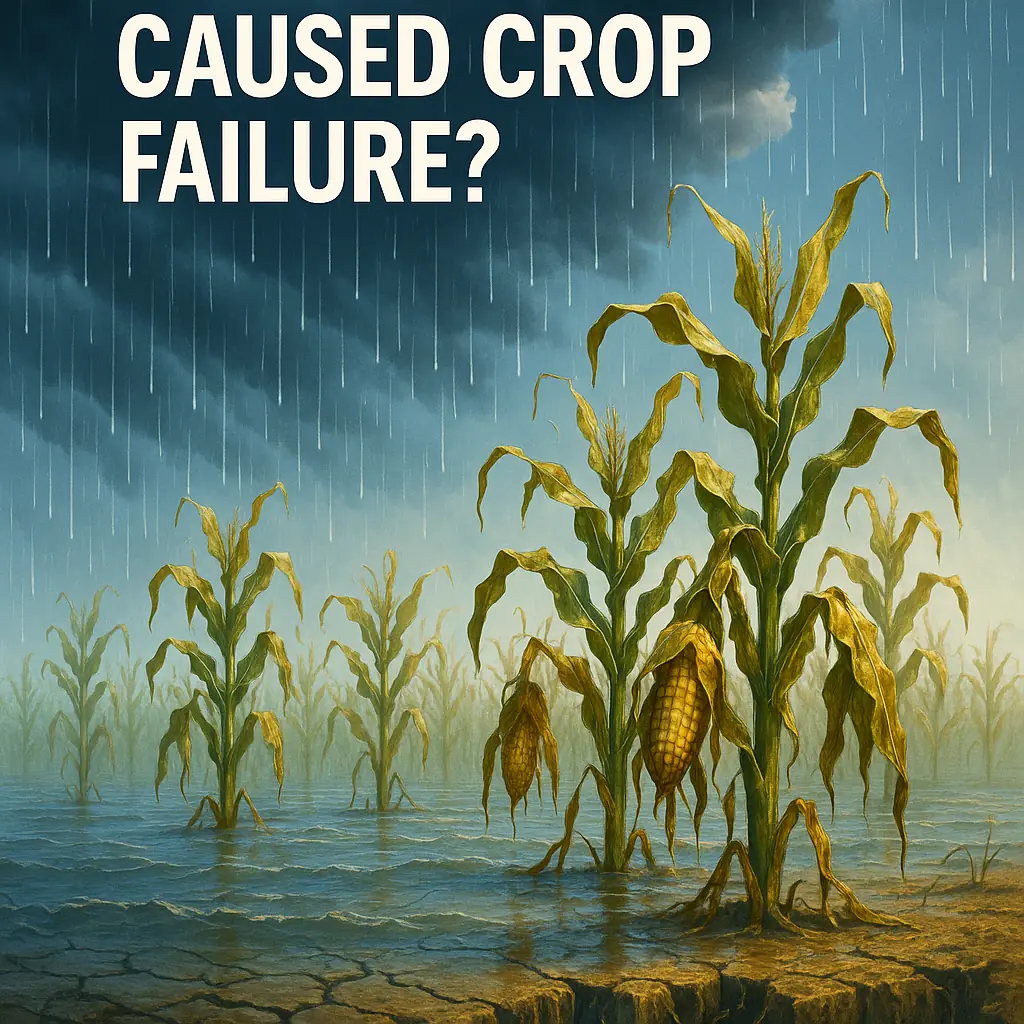
Saturated soils lose oxygen within 24 to 72 hours. Young seedlings drown, and low-lying fields turn into standing water basins. Tractor wheels spin uselessly in mud. Localized rivers and drains overflow, cutting roads and isolating farms.
- Surface erosion removes topsoil from slopes.
- Harvest-ready crops in basins begin to rot fast.
- Seed germination stalls where seeds are submerged.
Diseases, nutrient loss, and planting failures
Fungal and bacterial diseases spread in persistently wet conditions. Roots develop rot because oxygen exchange stops, and plants show yellowing despite ample water. Heavy rain leaches nitrogen and other mobile nutrients away from root zones. Farmers trying to replant find seedbeds too soggy to prepare.
Cascading crop losses and supply stress
Multiple harvests fail in regions that rely on single-season production. Stored grain can mold if storage is damp or transport breaks down. Local markets empty and prices spike. Perishable supply chains for vegetables and fruit collapse first, followed by grain shortages where rain persists during planting or harvest windows.
Regional shortages and social strain
Food insecurity spreads beyond the hardest-hit farms. Urban areas dependent on regional food flows see shortages. Governments impose export controls to protect domestic supplies, which raises global prices. Smallholders with no cash reserves are pushed into debt or forced to sell assets.
Agricultural adaptation struggles and market shocks
Farmers try quick fixes: raised beds, surface drainage, shifting sowing dates, and switching to water-tolerant varieties. In many places these measures are too slow or too expensive. Investment shifts toward flood infrastructure and storage improvements, but losses and price volatility make planning hard.
Longer-term land use changes and migration
Some croplands are converted to wetlands or pasture. Irrigation investment falls where drainage cannot cope, and rural populations migrate toward cities or drier regions. Countries with flexible trade and strong reserves manage, while poorer nations face chronic shortages and social instability.
New agricultural geographies and ecosystems
Where wet conditions become persistent, agriculture shifts to water-adapted systems: floating rice, aquaculture, wetland agroforestry. Biodiversity patterns change as wetland species expand and dryland specialists contract. Global food systems stabilize on a new, less productive equilibrium if breeding and infrastructure keep up.
What science says
Why do crops fail when rain never stops? Plant roots need both water and air. Waterlogged soil reduces the pore space where oxygen lives. Without oxygen roots cannot perform respiration, energy production collapses, and plants stop taking up nutrients. That process leads to wilting and death even though the soil is saturated.
Continuous rain also leaches soluble nutrients like nitrate away from the root zone into deeper soil or groundwater, leaving plants starved despite apparent abundance. Pathogens multiply in wet, cool conditions. Fungi that cause root rots and blights find ideal conditions when leaves and soil stay moist for days on end. Pollination suffers too. Bees and other pollinators avoid flying in persistent rain, reducing fruit set for crops that need insect pollination.
On a meteorological level, persistent rainfall often follows stalled weather systems. A stationary front or a blocked jet stream can park a moisture-laden air mass over a region for weeks. Warmer air holds more moisture, so a warming climate increases the potential for heavier and longer rainfall events. Ocean patterns like a strong El Nino or a persistent monsoon pattern can also produce prolonged wet seasons.
Soil type matters. Coarse-textured sands drain faster than fine clays, where water can sit and suffocate roots. Topography, drainage infrastructure, and crop type all modulate the outcome. Some crops tolerate waterlogging for a while, rice being the poster child, while most vegetables and major cereals like wheat and maize are vulnerable if conditions persist during sensitive growth phases such as germination or harvest.
Could anything survive?
If downpours never quit, surviving takes both quick action and long-term planning. Immediate measures reduce losses; strategic changes reduce vulnerability.
Short-term tactics
- Improve drainage: temporary ditches, pumps, and raised beds buy time.
- Protect seeds and grain: waterproof storage, drying facilities, and moving high-value stock to higher ground.
- Switch to flood-tolerant varieties where available, like certain rice strains or waterlogging-resistant forages.
- Move machinery and fuel to dry storage; avoid soil compaction by limiting heavy traffic in wet fields.
Community and market measures
- Coordinate local flood response so roads and distribution stay open where possible.
- Create emergency food reserves and targeted cash transfers rather than broad price controls, which can backfire.
- Prioritize pollinator-safe sheltering and hand-pollination in small orchards if necessary.
Medium- to long-term strategies
- Invest in permanent drainage, retention basins, and controlled flooding zones that protect prime cropland.
- Breed and adopt varieties with root oxygen tolerance, faster maturation, and disease resistance suited to wet soils.
- Rethink cropping calendars and diversify away from single-season dependency. Introduce wetland farming like floating gardens and integrated aquaculture where appropriate.
- Build wet, durable storage and transport nodes on higher ground and strengthen international grain reserve cooperation to buffer shocks.
Policy matters. Land-use zoning, insurance instruments that cover prolonged wet risks, and international trade agreements to keep markets flowing will reduce social strain. No set of fixes is universal. Richer nations can afford engineered solutions; poorer regions may need low-tech community responses and targeted aid.